

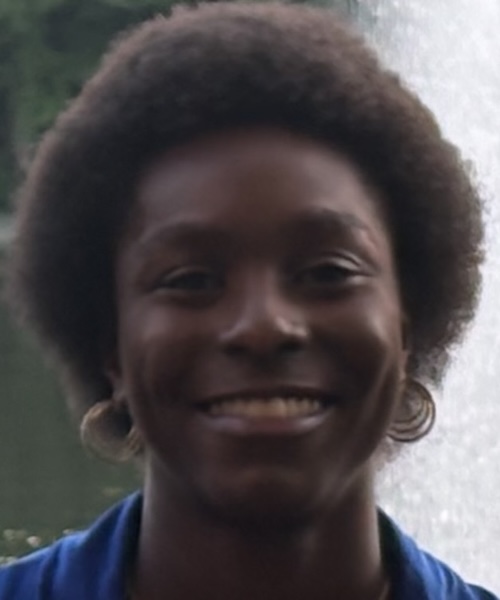
Ella Wakiaga
Ella Wakiaga (B'29) is an undergraduate student in the McDonough School of Business. She is a 2026 Doyle Dialogue Fellow.
My Doyle Dialogue Fellows experience has shaped this past semester in so many ways. I have gained friends, learned how to honestly reflect on my own conversations, and found myself in new spaces outside of my comfort zone. The most formative part of this experience, though, has been learning how to listen. I’ve learned that being a great listener is not merely paying attention to the words that someone is speaking, but focusing on what those words mean.
The practice of looking for “signposts of meaning” has had a radical effect on my life. Within dialogue settings, it’s allowed me to ask questions that carry deeper meaning. I’ve been able to cut through the noise of surface-level observations and pleasantries and find what is actually worth discussing with those I am engaging in dialogue. By being an intentional listener, I can pinpoint the values and life perspectives that a person holds within the context of that particular discussion. I’ve learned that this is what makes it possible to have meaningful conversations across differences. While discussing political and social issues, though, it’s very important to think practically about the implications of these topics. I have found it very fruitful to discuss the underlying values that make up these conversations. If the participants in the dialogue have an honest, open mindset, they're likely to forge a connection through their newly revealed values.
The In Your Shoes™ session was also incredibly beneficial for my dialogue skills. It forced me to listen to one of my peers speak uninterrupted for a considerable amount of time. I couldn’t distract myself with lazy conversation fillers, and I had to be an active participant while my partner shared an important piece of their life with me. This further emphasized the importance of being an intentional listener. I can only describe the act of capturing my partner’s words, physically transcribing them, and then speaking as if they were my own as beautifully intimate. I could feel their lived experience interlocking with my own, and I felt that they experienced the same while reciting my own words. After ending the exercise, I had the overwhelming feeling of being a part of something bigger than myself. I believe that this exact feeling should be one of the end goals of dialogue; it represents community, a willingness to learn from one another, and the warmth of knowing that you’ve been trusted with a part of someone’s life.
My view of what it means to have differing ideas with someone has dramatically shifted. I used to see conflict as an absolute negative that needed to be resolved, ideally through a compromise. I believed that if two people had different opinions, sat down and talked about it, and didn’t leave the conversation with the same opinion, then their conversation had failed. Now, I see that there is so much to be gained through dialogue, even if it doesn’t lead to resolving differences. By having a safe, healthy dialogue with someone, you can immediately open them up to the possibility of having dialogue with others, across a range of different topics. Increased communication across differences is always a positive outcome. I believe that this idea doesn’t just apply on an individual level, but can also hold on a much larger scale. If the American public were exposed to more dialogue (not debate), this would set a standard that would help people to depolarize their own conversations. This would, in turn, place pressure on leaders to be more mindful and intentional in how they interact with those with differing opinions, because their constituents would expect them to participate in reasonable dialogue.
Overall, the Doyle Dialogue Fellowship has been a fruitful experience, and I hope that it is a defining part of my college experience. The lessons I’ve learned will stay with me for the rest of my life, and I have truly cherished the opportunity to practice dialogue with my peers.
Ella Wakiaga (B'29) is an undergraduate student in the McDonough School of Business. She is a 2026 Doyle Dialogue Fellow.