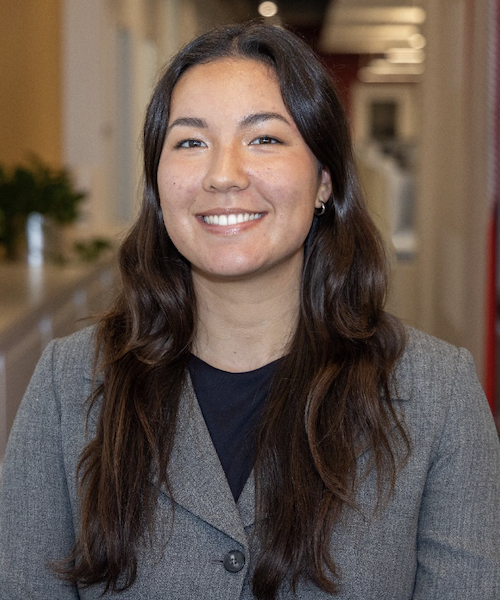
I came into the fellowship with dialogue skills from my role as a facilitator in the campus club BridgeUSA-D.C. There, I practice guiding difficult political conversations and bridging differences through open dialogue. However, the Doyle Dialogue Fellows program introduced me to many more techniques and methodologies to enrich these conversations. These skills have helped me be more empathetic and seek understanding when I engage in conversations of difference. While this has always been important to me when talking to somebody I disagree with, the fellowship helped give me the skills to dig deeper into where points of difference could appear, how personal experiences cause bias, and how respectful inquiry can facilitate bridging that difference.
For example, towards the end of the fellowship, I participated in a facilitated conversation at the Arlington Jail through the Frederick Douglass Project. Before talking to incarcerated people, two of the correctional officers gave me and the other participants a tour of the jail. I have studied various aspects and injustices of the criminal legal system, so I was initially pessimistic about interacting with the correctional officers and hearing what they had to say about the jail system that they oversee. However, the Resetting the Table techniques introduced in the fellowship helped me keep an open mind. During the jail tour introduction, the correctional officers asked if anyone had any questions, and I asked both of them why they decided to pursue their career paths. I made sure to frame the question very openly, and I was genuinely curious about what they had to say. Had I not been given the skills and understanding as to why it was important to bring up this question in an open, inquisitive way, I could’ve asked something more inflammatory and antagonistic.
My understanding of dialogue has deepened because I can understand the quality of dialogue as the defining factor for whether or not somebody chooses to keep engaging with a certain mission or initiative. The Resetting the Table framework is impactful because I’ve been able to incorporate the “following meaning” skills in my role as a facilitator and in conversations with friends and classmates. I also believe that demonstrating understanding is an important dialogue skill that I will use more. I feel like it helped me actively listen and challenge myself in naming back what was said. Lastly, naming differences is a helpful tool I used in the past when engaging in political conversations with people of different political beliefs, because it allows each person to understand where the disconnect in ideas is coming from. This helps each speaker acknowledge how the other person views them, which mitigates some of the intensity and conflict of more controversial degrees of disagreement.
I incorporated these skills into my role as a facilitator for a student dialogue event on the Georgetown University wealth gap hosted by BridgeUSA-D.C. This conversation topic was difficult to frame in a way that wouldn’t target or uncomfortably highlight students’ backgrounds, while encouraging a robust conversation about wealth on Georgetown’s campus. By using the Resetting the Table methodologies in my facilitation, I was able to allow students to share their observations, feelings, and experiences in the capacity that they felt comfortable, while moving the conversation forward. We were ultimately able to discuss not only what we were seeing on campus and our objections to the culture around wealth, but also how we could move forward and change the culture as a student body and via the role of the administrators.
Employing these methodologies helped me push the conversation in a forward-thinking direction because it created a safe space that allowed students to share their experiences authentically and openly. I’ll continue to use these skills in conversations in my personal life, as well as in classrooms and future discussions I attend or facilitate.